Most Tennessee homeowners who call us for a metal roof estimate have already gotten one for shingles. The shingle quote is usually about a third of the metal one, and that gap stops a lot of conversations before they really start.
Here's the problem with that comparison: it's the wrong math. A metal roof you install today will outlast three or four shingle roofs in our climate. Once you put both options on the same timeline, the numbers shift dramatically. Sometimes metal wins by a wide margin. Sometimes shingles still make sense. The point of this guide is to give you the actual numbers so you can decide for the right reasons.
The headline answer
In Middle Tennessee, an architectural asphalt shingle roof typically lasts 15–22 years. A properly installed standing seam metal roof lasts 70+ years. So over the lifespan of one metal roof, you'll replace shingles three to four times.
Once you account for that, here's the rough lifetime math on a 2,200 sq ft home:
| Cost component | Architectural shingle | Standing seam (24-gauge) |
|---|---|---|
| Initial install | $11,000 | $27,500 |
| Replacement #2 (year 20) | $14,000 | — |
| Replacement #3 (year 40) | $18,000 | — |
| Replacement #4 (year 60) | $23,000 | — |
| Insurance discount (50 yrs) | — | −$3,000 to −$8,000 |
| Energy savings (50 yrs) | — | −$5,000 to −$10,000 |
| 50-year total | $66,000+ | $9,500 – $19,500 net |
Those replacement costs assume 4% annual inflation on roofing labor and materials, which has actually been low in our experience. Real shingle replacement costs in 20 years will probably be higher.
Cumulative Cost of Ownership Over 50 Years
One metal install vs. three shingle replacement cycles on a 2,200 sq ft home.
- Shingles
- Standing Seam Metal
Lifespan: what we actually see in the field
We do a fair amount of repair work on roofs we didn't install, which means we see a lot of failed roofs of every type. Here's what we see in Tennessee specifically:
- Architectural asphalt shingles: 15–22 years on average before granule loss, curling, and brittleness force a replacement. Shorter on south-facing roofs, poorly ventilated attics, and after serious hailstorms.
- 3-tab shingles: 12–18 years. We don't recommend installing them anymore — the price difference vs. architectural is small and the lifespan gap is large.
- Screw-down metal panels: 35–60 years. The limiting factor is the rubber-gasketed fasteners, which typically need to be serviced or replaced every 18–22 years.
- Standing seam metal: 70+ years with proper maintenance. The oldest we still service in Wilson County are pushing 75 years and still doing their job.
- Stone-coated steel: 45–55 years. The appearance of shingles with the durability of metal, at a price point between the two.
Typical Lifespan in Middle Tennessee
Floating bars show the low–high expected service life in our climate.
The reason metal lasts so much longer in Tennessee specifically is that our climate is hard on shingles. Summer heat-cycling between attic temperatures of 130°F and overnight lows pulls the asphalt out of the mat. Add in occasional hail, ice in January, and weeks of UV exposure, and shingles age fast here. Metal doesn't care about any of that.
Total cost of ownership over 50 years
Here's the comparison most homeowners have never actually seen. We modeled this for an average Wilson County home of 2,200 sq ft, using current 2026 pricing and conservative inflation assumptions.
Shingles — three replacement cycles
- Year 0: $11,000
- Year 20: $14,300 (3% inflation)
- Year 40: $18,500
- Repairs over 50 years: ~$4,000
- Total: ~$47,800
Standing seam 24-gauge — one install
- Year 0: $27,500
- Repairs over 50 years: ~$1,500
- Total: ~$29,000
That's roughly $18,500 in lifetime savings on a single house, and it doesn't include energy, insurance, or resale impact yet.
Energy savings
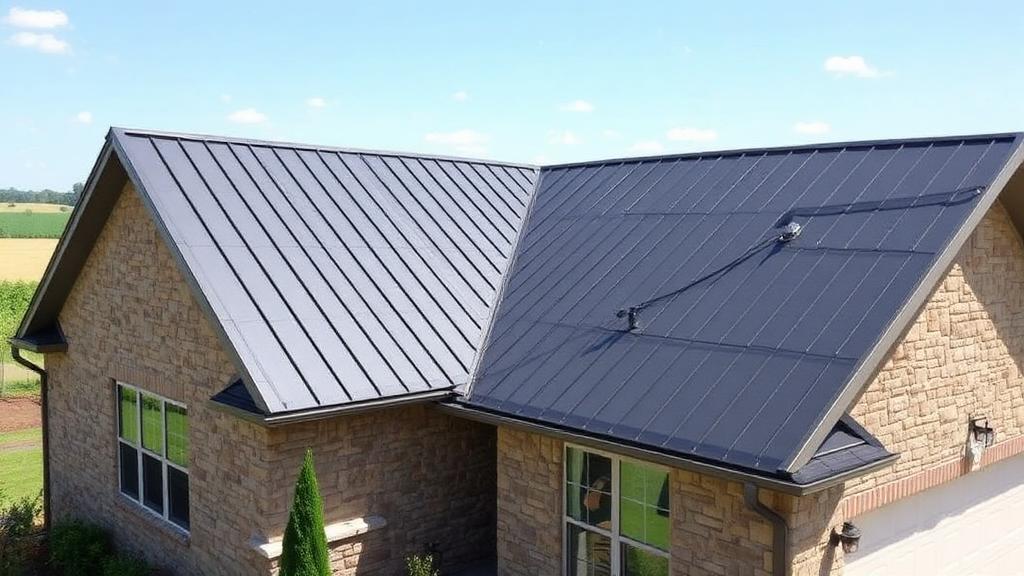
A reflective metal roof bounces solar radiation back into the sky instead of soaking it into your attic. In Tennessee, where we run AC from late April through September, that matters.
Most homeowners we've installed for report 10–25% lower summer cooling bills after switching to metal. The variation depends on attic ventilation, insulation quality, and panel finish. A light-colored metal roof with a reflective Kynar 500 finish performs better than a dark one.
Run the numbers conservatively: if your summer electric bill drops $40/month for five months a year, that's $200/year. Over 50 years, $10,000 in your pocket that you'd have given to TVA.
Insurance impact
Most insurers in Tennessee now offer a metal roof discount. The structure varies. Some give a flat 5–10% reduction on the dwelling premium. Others reduce or eliminate hail-related deductibles. A few offer 25% off when paired with impact-rated panels.
For a $2,000 annual homeowner's policy, even a modest 8% discount is $160/year. Over 50 years, that's $8,000 of pure savings. The short version: yes, almost always, you save money on insurance with a metal roof.
Resale value
Realtors in Middle Tennessee consistently tell us that a quality metal roof is a selling point. Homes with newer metal roofs typically appraise $5,000–$15,000 higher and sell faster than identical homes with aging shingle roofs.
The reason is simple. A buyer looking at a 14-year-old shingle roof knows they're inheriting a $14,000 problem in the next five years. A buyer looking at a 5-year-old standing seam roof knows they're inheriting nothing. That difference shows up in offers. This is also why selling immediately after installing a roof rarely makes financial sense for either material — you get full value by living under it for at least 7–10 years.
Where shingles actually win
Despite all of the above, shingles are still the right answer for some homeowners. Specifically:
- You're not staying. If you're selling in 2–4 years and your current roof has more than five years of life left, replacing it doesn't pay back. If it has less than five, shingles are usually the more efficient sale-prep choice.
- You can't afford the up-front difference. A metal roof is 2–3x the price at install. Even though it's cheaper over time, "cheaper over time" doesn't help if you don't have the cash today.
- Strict HOA or historic district rules. Some neighborhoods restrict metal roofing. Standing seam in historically appropriate colors often passes review, but check before you fall in love with the idea.
- Very low pitch. Standing seam needs a minimum of 2/12 pitch, and screw-down generally needs 3/12. On low-slope sections, you'll want a different solution.
For everyone else with a 7+ year ownership horizon, the math leans heavily toward metal.
What about hail and storms?
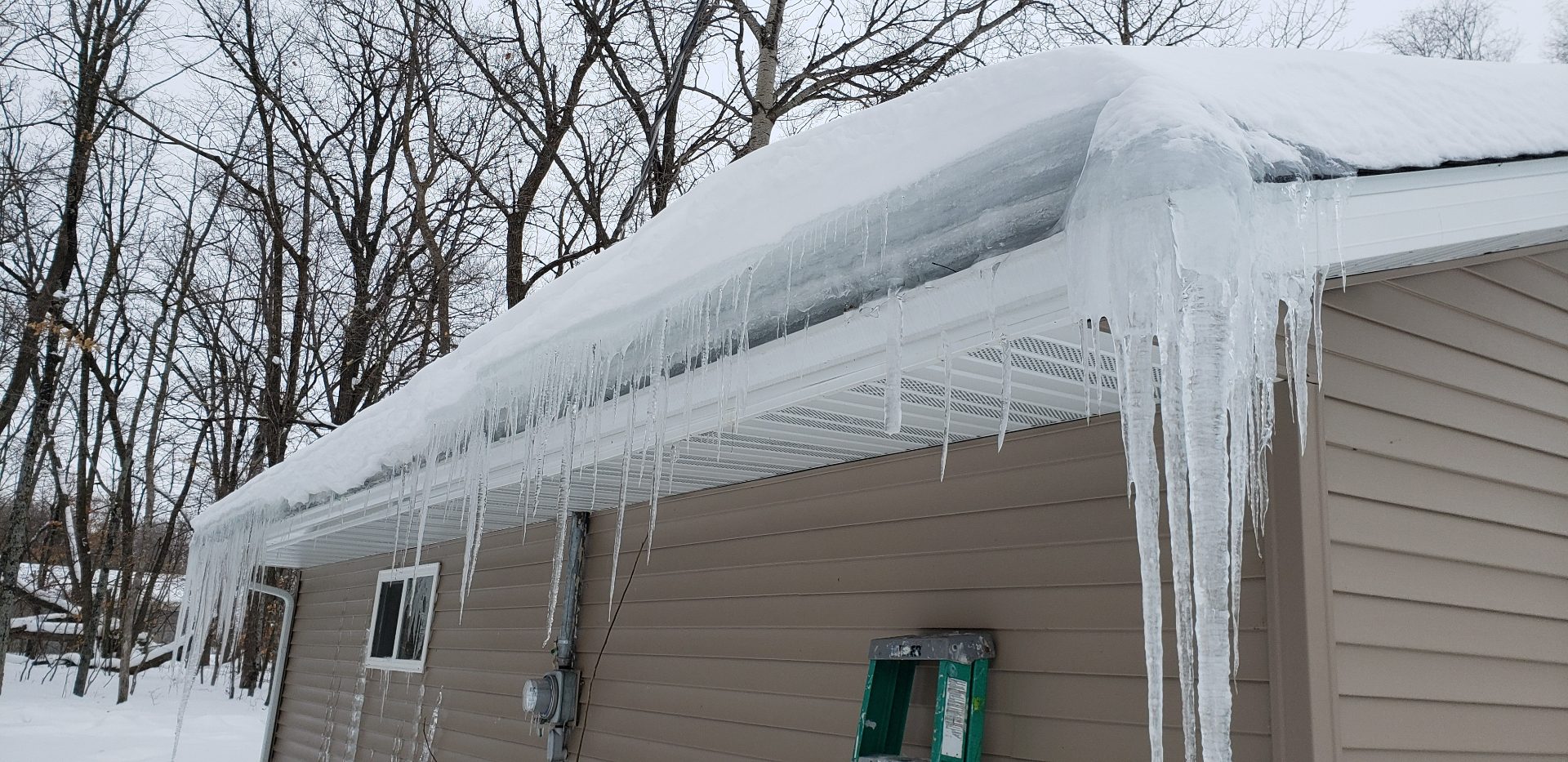
Tennessee gets hit hard by hail every couple of years. The Nashville area in particular has seen multiple costly hail events in the last decade.
Standing seam panels in 24-gauge or thicker are tested to withstand 2-inch hail without functional damage. They can ding cosmetically, but the roof keeps doing its job. Asphalt shingles, by contrast, can have their granular layer stripped by 1.25-inch hail in a single storm. We've replaced full shingle roofs after one bad afternoon.
This is also why the insurance numbers above end up favoring metal so consistently. Insurers know exactly what shingles look like after a hailstorm. They also know what metal looks like.
Run the math for your house
The numbers in this article are realistic averages for Middle Tennessee. Yours will be different, depending on roof size, pitch, current condition, and how long you plan to stay in the house.
If you want a real apples-to-apples comparison for your specific home, we'll walk your roof, give you written quotes for both options, and share the lifetime math so you can decide based on your actual numbers. Call (615) 489-6279 or request a free estimate. Want to see what each option would look like on your home first? Try our free roof visualizer.